
Air-to-Water Heat Pumps: The Water Home Comfort Solution Explained
What Is an Air-to-Water Heat Pump?
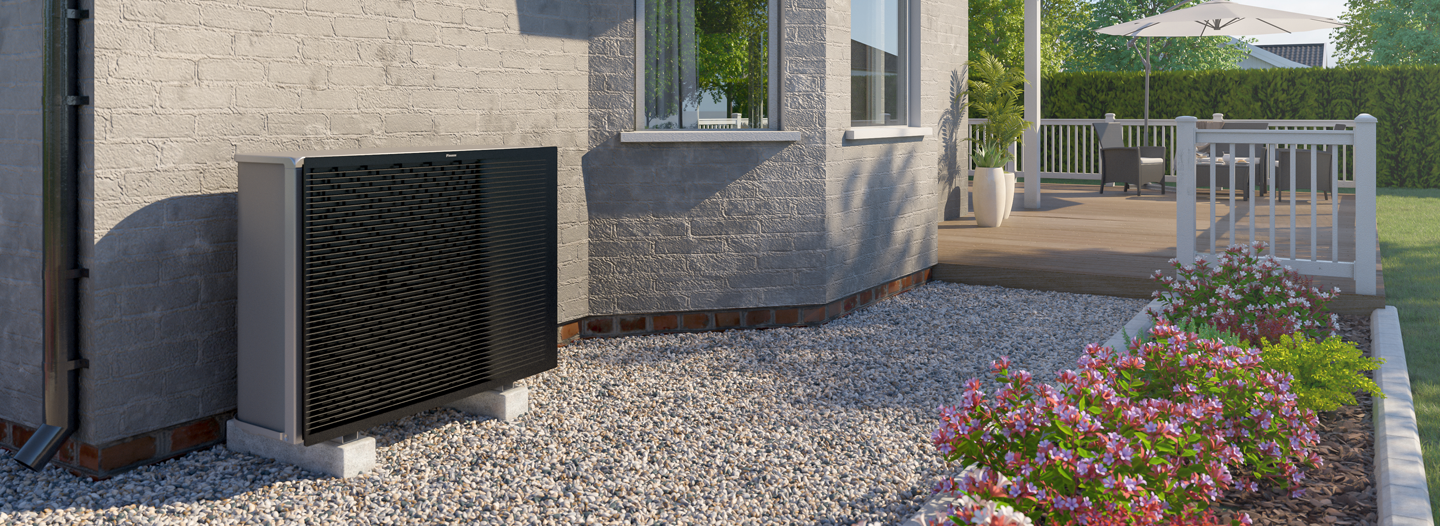
You might be familiar with standard "air-to-air" heat pumps that blow warm or cool air through vents. However, another option to replace a fossil fuel boiler is an air-to-water heat pump. Unlike a boiler, which heats water by burning fuel, an air-to-water heat pump works differently by extracting heat from the outside air (yes, even when it’s cold!) and transferring it to the water circulating through your home, providing heating and hot water indoors. For cooling, the process is reversed.
An air-to-water heat pump can replace a boiler because it performs the same main function: heating water, which is then supplied to indoor spaces through emitters like baseboards, radiators, or radiant heating. Some models are also designed to produce hot water for domestic use.
An air-to-water heat pump includes the following components:
1. Heat Pump Unit: This is where heat is captured from the outside air, using a refrigerant, then transferred to the indoor unit via water.
- The outdoor unit contains the evaporator coil, compressor, and plate heat exchanger, where heat from the refrigerant is transferred to water.
2. Hydrobox: Houses the controls and hydronic components.
Inside the Hydrobox, you’ll find:
- Control System – The electronic brain of the air-to-water heat pump system that manages the entire operation.
o Reads temperature sensors.
o Decides when to activate and deactivate the system.
o Handles modes (heating, cooling, domestic hot water).
- Circulation Pump – Moves heated water through radiators, radiant heating, or to a hot water tank.
- Sensors– Monitors temperatures, pressures, and flow rates..
- Backup heater - Provides supplementary heat when required.
- Advanced User Interface - Quick to configure and easy to operate for both installers and homeowners.
Some air-to-water heat pumps may be considered a “Monobloc”, where all the main components of the heat pump system are housed in a single outdoor unit. It integrates the compressor, heat exchanger, and refrigerant circuit into a single compact outdoor unit. It directly connects to the home’s water-based heating system (radiators, radiant heating, or hot water tank) via insulated water pipes.
How Air Heats Water…To Heat Your Indoor Air
An air-to-water heat pump system, like the Daikin ALTHERMA 3 H HT, operates on the same principle as a refrigerator, only in reverse. While a refrigerator extracts heat from the space it cools and releases it into the surrounding environment, the outdoor unit of an air-to-water heat pump extracts heat from the outdoor environment, raises it to a higher energy level, and then transfers it as heat into the water that circulates through emitters such as radiators and radiant heating systems.
Here’s how it works:
• Heat Extraction from Air
• The outdoor unit contains a refrigerant that absorbs thermal energy from the outside air—even in cold weather.
• This happens in the evaporator coil, where the refrigerant evaporates at a very low temperature. This phase change from liquid to vapor requires heat, which the refrigerant absorbs from the surrounding air.
• Compression and Heat Boost
• The evaporated refrigerant is then compressed by a compressor, which significantly increases (boosts) its temperature.
• Now the refrigerant is hot and ready to transfer heat.
• Heat Transfer to Water for Space Heating
• The hot refrigerant flows through a heat exchanger inside the outdoor unit. The heat exchanger’s job is to transfer heat from the refrigerant to water for your home’s heating and domestic hot water system.
• The hot water produced in the heat exchanger circulates through your space-heating system (radiators, underfloor pipes, for example), heats your home, then flows back through the heat exchanger to be reheated.
• Heat transfer to Water for Domestic Hot Water Production
• The same hot water used for space heating can also heat your hot water tank.
• The hot water circulates through a coil inside your hot water tank and heats up the water inside before flowing back through the heat exchanger to be reheated
• The heated water is stored in your tank, ready for showers, dishwashing, and other household needs.
• This process is highly efficient because the system utilizes “free” heat rather than generating it through combustion.
• Refrigerant Cycle Repeats
• When the refrigerant transfers its heat to the water, it cools down, turns back into liquid, and the cycle begins again.
To cool, the process is reversed. Through the heat exchanger, refrigerant now extracts heat from the water circuit, cooling the water and transferring the heat outside. Chilled water circulates through so-called heat pump convectors, a hydronic air handler, or even through radiant floor loops, gently lowering the indoor temperature for consistent, comfortable cooling.
Stop Burning Fuel, Start Reusing Heat Energy
The key to a heat pump's efficiency lies in its technology: air-to-air and air-to-water heat pumps move existing thermal energy rather than burning fuel.
If you’d like to find out more about how air-to-water heat pumps work, what the benefits are, and whether your home is suitable for an air-to-water heat pump, contact Daikin Comfort to express your interest in ALTHERMA 3 H HT.
ADDITIONAL INFORMATION
Before purchasing an appliance, read the important information about its estimated annual energy consumption, yearly operating cost, or energy efficiency rating available from your retailer.
In this article
Connect on Social Media
 Follow on Facebook
 Follow on YouTube
 Follow on Instagram
 Follow on X
 Follow on TikTok
 Follow on Pinterest

Looking for help now?
Enter your zip code to search for Daikin Contractors in your area.
Learn More
Learning Center Content
Stay informed about home comfort technology, when to upgrade, energy efficiency, and reducing your energy bills.

Can Humidity Control Help You Stay Comfortable at Higher Thermostat Settings?
29 Jul 2026
Think your thermostat tells the whole comfort story? Humidity can change how warm or cool a home feels, and too much moisture in the air may make even moderate temperatures feel muggy or uncomfortable for some occupants.
How Inverter HVAC Systems Are Designed to Impact Your Energy Bills
8 Jul 2026
Understanding your home’s energy use can start with learning about your HVAC system’s efficiency and the technology behind it. Inverter technology offers an efficient way to heat and cool your home, helping to maximize your comfort while managing energy use. This article explains how inverter systems work and how they are designed to affect your monthly energy costs.
Rising Electricity Rates: How Smart HVAC Choices Can Help Homeowners
27 May 2026
For homeowners concerned about rising electricity rates, heating and cooling efficiency is one of the most practical ways to manage long‑term energy costs, especially as the power grid faces increasing demand.
Air-to-Water Heat Pumps: The Water Home Comfort Solution Explained
17 Apr 2026
Considering replacing your fossil-fuel boiler with something new? Tired of maintaining a separate boiler, AC unit, and water heater? Air-to-water heat pumps are a modern, 3-in-1 answer to your total home comfort.

How to Lower my Energy Bill
3 Feb 2025
There are many ways to reduce energy bills, including replacing windows, adding insulation, zoning your home, and upgrading your system.